

ZELUS Weighted Vest, 6lb/8lb/12lb/16lb/20lb/25lb/30lb Weight Vest with Reflective Stripe for Workout, Strength Training, Running, Fitness, Muscle Building, Weight Loss, Weightlifting
$27.89 (as of October 15, 2026 21:03 GMT +00:00 – More infoProduct prices and availability are accurate as of the date/time indicated and are subject to change. Any price and availability information displayed on [relevant Amazon Site(s), as applicable] at the time of purchase will apply to the purchase of this product.)
Sabre Pepper Spray with Quick Release Keychain for Self Defense – Maximum Police Strength OC Spray with UV Marking Dye, Twist Lock Safety, Finger Grip, 10‑Second Spray, 14‑ft Range, Made in USA
$16.99 (as of October 15, 2026 21:03 GMT +00:00 – More infoProduct prices and availability are accurate as of the date/time indicated and are subject to change. Any price and availability information displayed on [relevant Amazon Site(s), as applicable] at the time of purchase will apply to the purchase of this product.)
Intex Dura-Beam Deluxe 18″ Twin Size Air Mattress with Built-in Pump | 64411ED – Comfort-Plush Portable Inflatable Bed for Camping, Travel & Guests
$35.71 (as of October 15, 2026 21:03 GMT +00:00 – More infoProduct prices and availability are accurate as of the date/time indicated and are subject to change. Any price and availability information displayed on [relevant Amazon Site(s), as applicable] at the time of purchase will apply to the purchase of this product.)
NBA 2K27 – PlayStation 5
$66.90 (as of October 15, 2026 21:03 GMT +00:00 – More infoProduct prices and availability are accurate as of the date/time indicated and are subject to change. Any price and availability information displayed on [relevant Amazon Site(s), as applicable] at the time of purchase will apply to the purchase of this product.)
Hasbro Gaming Bop It! Patrick Mahomes Edition Game | Officially Licensed NFL Games for Kids & Teens | Ages 8+ | 1+ Players | Gifts for Football & Chiefs Fans
$11.09 (as of October 15, 2026 21:03 GMT +00:00 – More infoProduct prices and availability are accurate as of the date/time indicated and are subject to change. Any price and availability information displayed on [relevant Amazon Site(s), as applicable] at the time of purchase will apply to the purchase of this product.)With the increasing variety of radio control systems available, understanding the differences between ELRS and Crossfire can significantly enhance your flying experience. In this comparison, you’ll learn about the range, features, and performance of both systems, helping you make an informed decision that suits your needs. By stepping into the specifics, you can effectively determine which system aligns with your preferences and flying style, ensuring you achieve optimal connectivity and reliability in your aerial adventures.
Most hobbyists and professional pilots seek to maximize the performance of their radio control systems, and choosing between ELRS and Crossfire can be a pivotal decision. In this article, you will explore the range and features of these two popular systems, helping you make an informed choice for your needs. By understanding the strengths and weaknesses of each technology, you can better optimize your flying experience and ensure your craft operates smoothly from takeoff to landing.
Key Takeaways:
- ELRS (ExpressLRS) and Crossfire both offer impressive long-range capabilities, with ELRS generally achieving a greater range under optimal conditions.
- Crossfire is more established in the market and is known for its reliability and robust performance across various environments.
- ELRS boasts higher bandwidth and lower latency, which can enhance control responsiveness in competitive scenarios.
- Crossfire offers a wide selection of compatible receivers and modules, making it a versatile choice for many types of models.
- ELRS benefits from an open-source community, allowing for regular updates and customization options that appeal to tech-savvy users.

Key Takeaways:
- ELRS (ExpressLRS) offers superior range capabilities compared to Crossfire, particularly in environments with high interference, achieving distances beyond 100 km.
- Crossfire is renowned for its reliable latency, being optimized for racing and actions where quick response times are vital.
- ELRS operates on 2.4 GHz and 915 MHz frequencies, providing flexible options for users, while Crossfire mainly uses 868 MHz and 915 MHz, focusing on long-range performance.
- User-configurable features and customization possibilities are more extensive in ELRS, including open-source firmware, which appeals to hobbyists wanting tailored setups.
- Crossfire has a well-established market presence and reputation, offering a robust ecosystem of compatible devices, while ELRS is rapidly gaining popularity among FPV enthusiasts.
The Technical Backbone: How ELRS and Crossfire Operate
Understanding the technical fundamentals of ELRS and Crossfire provides insight into their performance and usability. ELRS utilizes a low latency and high-speed transmission mechanism built upon LoRa (Long Range), while Crossfire employs a robust, proprietary protocol designed for long-range communication. The difference in technology impacts the reliability and efficiency of data transfer during flight, allowing you to tailor your experience based on your use case and environment.
Signal Transmission Mechanisms
ELRS relies on a frequency-hopping spread spectrum technique, which ensures minimal interference even in crowded airspaces. Crossfire utilizes a more traditional direct sequence spread spectrum, focusing on stability and range. This distinction in signal mechanisms plays a pivotal role in how each system responds to environmental challenges while maintaining control over your aircraft.
Frequency Bands and Protocols
ELRS operates mainly on the 900 MHz and 2.4 GHz frequency bands, allowing for versatile applications in various settings. In contrast, Crossfire predominantly utilizes the 868 MHz and 915 MHz bands, providing optimized performance in different regions. The selection of frequency bands directly influences the overall range, reliability, and potential for interference, shaping your flying experience.
When discussing frequency bands and protocols, knowing the specific advantages each system offers is necessary. ELRS’s ability to function at both 900 MHz and 2.4 GHz means that it can easily adjust to the surrounding environment and interference levels. This dual-band capability allows it to outperform Crossfire, especially in densely populated areas. On the other hand, Crossfire’s design offers exceptional long-range capabilities primarily focused on lower frequencies, which are less susceptible to specific types of interference. Your choice will depend on the operational requirements and the environments in which you plan to fly.
Decoding the Range: ELRS vs. Crossfire
Understanding the range capabilities of ELRS and Crossfire is vital for maximizing your flying experience. ELRS boasts impressive specifications that cater to both recreational and professional applications, while Crossfire has established itself as a reliable choice for many pilots. By examining key aspects of maximum transmission distances and real-world performance, you can determine which system aligns with your needs.
Maximum Transmission Distances
ELRS can achieve maximum transmission distances of up to 100 km under ideal conditions, making it a formidable player in terms of range. In contrast, Crossfire typically offers reliable ranges around 1000-2000 meters, which, while substantial, may not compete with the upper limits of ELRS. Your specific environment and flight requirements will play a significant role in choosing the right system for your applications.
Real-World Range Performance
In practical applications, the effective range of both ELRS and Crossfire can differ from their maximum specifications. User experiences often highlight variability influenced by factors such as terrain, interference, and obstacles. Pilots using ELRS frequently report consistent signal integrity and low latency even at distances exceeding the manufacturer’s claims.
Your flying experience may closely reflect the real-world range performance of these systems, with ELRS consistently demonstrating adaptability in various environments. Users have shared instances of achieving up to 30 km of uninterrupted control in open areas, with minimal dropouts. Conversely, Crossfire excels in urban settings where interference is prevalent, often maintaining a stable signal within its advertised range. Ultimately, the effectiveness of either system hinges not only on specifications but also on the conditions you navigate during your flight. This practical insight into range performance helps you make an informed decision based on your specific flying conditions and preferences.

Range Realities: What Users Can Expect
The range capabilities of both ELRS and Crossfire promise impressive performance, but real-world outcomes can vary significantly based on several factors, including environmental conditions and hardware configurations. Users often find that while specifications boast of extensive coverage, the practical ranges encountered during flights may not align perfectly with those lofty claims. Navigating these realities will enable you to better understand the limitations and advantages of each system.
Maximum Distance Claims
Manufacturers of ELRS and Crossfire often cite maximum distance potentials that can reach impressive numbers. ELRS claims up to 100 kilometers under optimal conditions, while Crossfire reports maximum distances of around 1000 meters in typical use scenarios. These figures can seem enticing but need to be taken with a grain of caution, as they are based on ideal, controlled environments.
Real-World Performance Limits
In real-world situations, many users found that distances often fall well short of the manufacturer claims. Factors such as terrain, obstacles, and interference can drastically reduce effective range. A study from various user experiences reveals that while some achieve solid performance at around 10 kilometers in open fields, urban environments tend to limit this to just 2-3 kilometers due to signal occlusion and noise. Understanding these performance limits allows you to set realistic expectations and make the most of your system’s capabilities.
Signal Integrity: A Battle of Reliability
Building a reliable connection is important for any radio control system, particularly during long-range flights or in challenging conditions. ELRS and Crossfire each bring unique attributes to the table, affecting their performance in real-world scenarios. With ELRS, the system is designed for robustness against signal degradation, employing a frequency-hopping spread spectrum to maintain a stable link. Crossfire, on the other hand, has a strong pedigree in signal retention and is engineered to minimize disruptions, making each option appealing depending on your operational needs.
Signal Loss and Interference Management
Effective management of signal loss and interference is vital for maintaining control. ELRS utilizes a dynamic frequency-hopping technique, which mitigates potential interference by rapidly switching channels to avoid crowded frequencies. In contrast, Crossfire features a long-range protocol that excels in less complex environments, but can struggle in high-interference situations. While both systems have their merits, ELRS offers a more adaptive approach for diverse flying conditions.
Data Packet Efficiency and Latency
Data packet efficiency and latency play a significant role in your overall control experience. ELRS boasts a highly efficient data packet transmission system, allowing for faster updates and reduced latency. With response times often less than 5ms, you can expect snappy and precise control, especially in racing scenarios. Crossfire’s architecture, while solid, results in slightly higher latency, typically around 10-20ms. Depending on your requirements, ELRS may provide the edge you need for precision flying.
Delving deeper into data packet efficiency, ELRS uses a 2-way communication method, ensuring that both your control signals and the telemetry data are transmitted rapidly and reliably. This bi-directional aspect allows you to receive important feedback from your aircraft without sacrificing control responsiveness. Furthermore, ELRS’s adaptive RF protocols ensure that even in challenging environments, latency remains low, allowing for synchronized movements important for acrobatic or high-speed maneuvers. Crossfire’s reliable approach, while effective, doesn’t quite match the agility and efficiency that ELRS delivers in fast-paced scenarios.
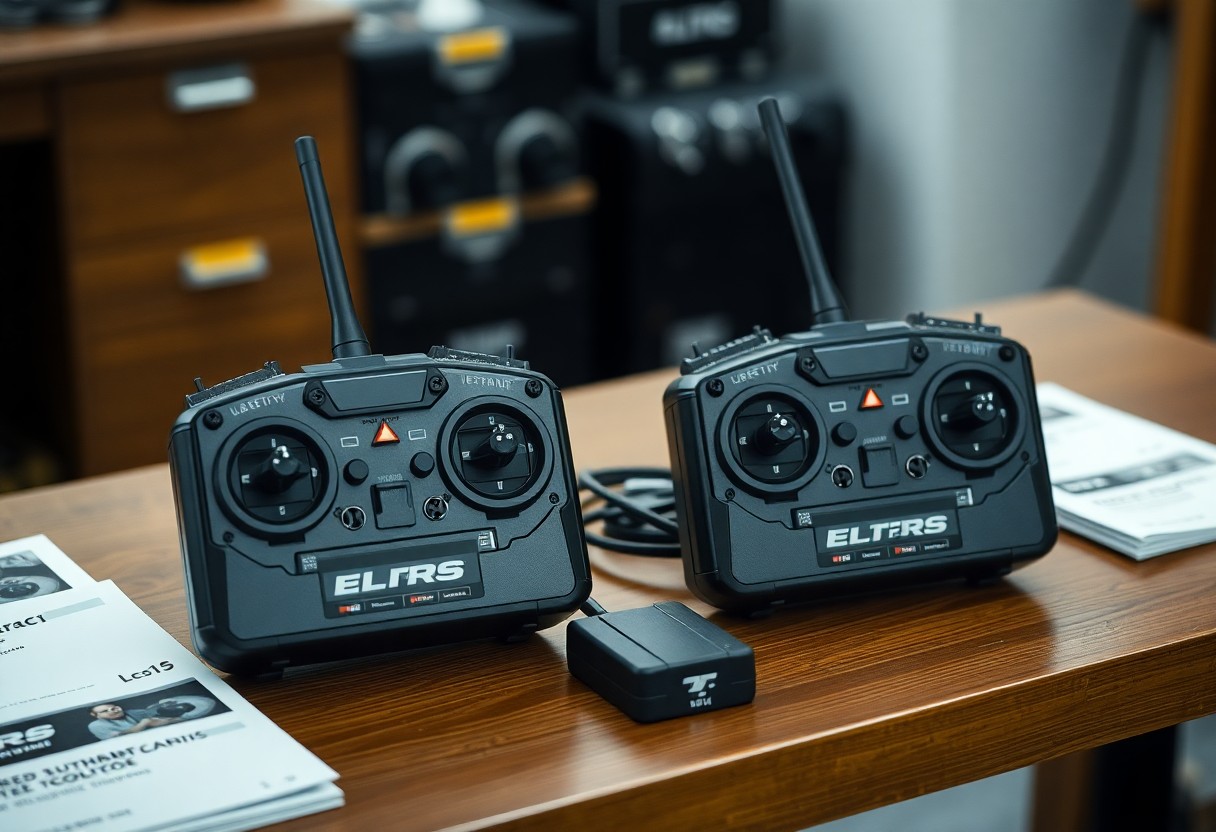
Features That Set Them Apart
Both ELRS and Crossfire boast unique features that cater to different preferences and requirements among hobbyists. Each system brings its own strengths to the table, influencing the choice of users based on their specific needs, whether it’s range, latency, or customization options. Understanding these distinctive features can help determine which system suits your flying style and objectives best.
Unique Capabilities of ELRS
ELRS stands out with its open-source nature, allowing for continuous development and community-driven improvements. It offers extremely low latency and supports DSHOT telemetry, making it particularly appealing for drone racing enthusiasts. With its ability to operate on various frequency bands, you can enjoy flexibility in your setup, ensuring reliable performance even in crowded environments.
Innovations Offered by Crossfire
Crossfire is renowned for its long-range capabilities, boasting reliable communication over distances exceeding 100 kilometers. Its patented frequency-hopping spread spectrum technology minimizes interference, ensuring robust connectivity during critical missions. Additionally, Crossfire incorporates features like dynamic power output to optimize signal strength while preserving battery life, making it an attractive option for long-duration flights.
Innovations from Crossfire include features like the CRSF protocol, which enables bidirectional communication for real-time telemetry data. This is particularly beneficial for advanced users who require comprehensive feedback from their aircraft, allowing for informed decision-making during flights. Moreover, Crossfire supports multiple receiver configurations, providing you with a tailored approach to manage your control links efficiently. This level of customization combined with its ease of setup makes Crossfire a preferred choice for many seasoned pilots in the RC community.

Features that Matter: Beyond Just Range
Range is a significant aspect of radio control systems, but features like telemetry, customization, and build quality also profoundly influence your overall flying experience. The decision between ELRS and Crossfire doesn’t solely rest on distance; additional capabilities can greatly enhance your control interface, ensuring you have a comprehensive understanding of your aircraft’s status and customizable settings to fit your unique flying style.
Advanced Telemetry and Feedback Systems
Telemetry systems provide vital information about your model during flight, enhancing safety and performance. Both ELRS and Crossfire offer impressive telemetry features that give you real-time insights. Here’s a breakdown of key telemetry attributes:
| Feature | ELRS | Crossfire |
|---|---|---|
| Real-time Signal Quality | Yes | Yes |
| Battery Voltage Monitoring | Yes | Yes |
| GPS Data Integration | Optional | Yes |
| Loss of Signal Alerts | Configurable | Configurable |
Customization Options for Users
Personalizing your radio system can elevate your flying experience significantly. ELRS and Crossfire allow you to tailor settings according to your preferences, from channel selections to telemetry readouts. The flexibility offered ensures that you can create an intuitive control setup that matches your flying style perfectly.
With ELRS, you’re welcomed into an open-source community that encourages modifications and enhancements, enabling programming changes directly through their firmware. This flexibility allows you to tweak various settings such as output power, refresh rates, and even how telemetry data is presented to you. Crossfire also offers solid customizability, allowing you to adjust parameters via the transmitter’s user interface, ensuring both systems cater to a wide range of user preferences while maintaining an effective line of communication during your flights.
User Experience: Control and Responsiveness
Control and responsiveness significantly shape your overall experience when flying FPV drones. Both ELRS and Crossfire excel at providing you with a seamless flying experience. ELRS offers customizable settings that allow you to tweak your control rates and receive immediate feedback from your drone, ensuring precise maneuvers. In contrast, Crossfire emphasizes a reliable long-range communication that enhances stability and receiver feedback, giving you a trustworthy connection regardless of distance. Tailoring your user settings within these systems results in a flight experience that feels both intuitive and robust, fitting your personal style and needs.
Latency Considerations
Latency can greatly affect your control experience, and this is where ELRS shines with its significantly lower latency compared to Crossfire. ELRS boasts a latency of just 5-10 ms, allowing for an almost instantaneous reaction to your commands. In contrast, Crossfire typically registers around 20 ms, which may introduce slight delays during fast maneuvers. For you, particularly in competitive flying scenarios, faster response times can mean the difference between executing a perfect turn or losing control.
Adaptability in Various Environments
Both ELRS and Crossfire exhibit adaptability in diverse environments, yet they do so in different ways. ELRS excels in crowded areas where interference may threaten the signal, utilizing frequency-hopping spread spectrum technology to maintain a solid connection. Meanwhile, Crossfire remains adept at handling obstacles and maintaining a strong link over long distances, thanks to its robust power output and frequency range. This flexibility ensures that regardless of whether you’re racing through a park or navigating dense urban environments, your chosen system can rise to the occasion.
In various flight environments, you might find that ELRS performs exceptionally well in densely packed areas, as it can switch frequencies swiftly to avoid interference from other devices. This makes it particularly appealing for those who often enjoy group flying in urban parks or crowded events. On the other hand, if you’re planning to conduct long-range flights in open spaces, Crossfire’s advanced range and consistency allow you to traverse large distances without sacrificing signal quality. Both systems offer adaptable features tailored to enhance your flying experience based on your specific needs.
Compatibility and Ecosystem: Which System Fits Yours?
Choosing between ELRS and Crossfire involves assessing their compatibility with your existing hardware and future plans. ELRS is designed to work seamlessly with various open-source flight controllers, making it an appealing option if you’re part of that ecosystem. In contrast, Crossfire offers a more proprietary approach, often requiring specific receivers and transmitters. If you already have equipment from one of these systems, staying within that ecosystem will simplify your setup and provide better performance.
Supported Aircraft and Accessories
Both ELRS and Crossfire boast extensive compatibility with numerous aircraft. ELRS supports a wide range of models due to its open-source nature, allowing you to pair it with various receivers and systems. Crossfire, while offering compatibility with a vast selection of aircraft, generally provides optimized performance with specific brands, making it vital to check compatibility before purchase.
Integration with Other Technologies
Integration with other technologies plays a significant role in the functionality of ELRS and Crossfire systems. ELRS excels in this area with features like low-latency telemetry, which pairs well with popular flight controllers and provides real-time feedback. Crossfire also offers telemetry capabilities but is often linked with proprietary systems that may limit flexibility. The choice between the two may come down to how well you want to integrate your radio system with other technology, such as flight data logging and FPV setups.
ELRS stands out for its flexibility in integration, allowing you to easily connect with various flight control platforms and third-party applications. This open principle fosters a vibrant community that continually develops new tools and enhancements. For instance, tools like Betaflight and iNav offer plugins that work seamlessly with ELRS, giving you access to telemetry data at your fingertips. Crossfire can deliver a more polished, albeit limited, experience by working closely within its ecosystem, relying on proprietary modules and software setups. Ultimately, choosing the right system depends on your ambition to tailor and innovate your flying experience.
Cost vs. Benefit: Value Proposition Analysis
Evaluating the cost against the benefits of ELRS and Crossfire reveals significant insights into their value propositions. While ELRS generally has a lower upfront cost, Crossfire brings its long-standing reputation and proven reliability to the table. Your choice may hinge on whether you prioritize initial affordability or a well-established system with robust support and consistent performance.
Price Comparison and Long-Term Costs
The financial aspects of each system highlight their distinct pricing structures and long-term costs:
Price Comparison Table
| System | Estimated Cost |
|---|---|
| ELRS | $30 – $70 |
| Crossfire | $100 – $200 |
Community feedback across various forums consistently shows satisfaction with both systems, but trends indicate a preference for ELRS among budget-conscious users. Enthusiasts often cite the extensive range and features of Crossfire as justifiable, especially for long-term investment in high-stakes applications like racing and aerial cinematography.
Reviewing Community Feedback and Satisfaction
User experiences reflect a balanced mix of satisfaction and criticism for both systems. ELRS users frequently commend its ease of setup and low cost but sometimes express concerns about potential signal loss in densely populated areas. Conversely, Crossfire users appreciate the proven technology and support but often point out the higher cost as a barrier for entry into competitive environments.
Diving deeper into specific community discussions reveals that many ELRS users appreciate the system’s rapid advancements and open-source contributions, which continuously enhance its capabilities. However, they sometimes contend that while initial savings are notable, the long-term value can be impacted by occasional compatibility issues and the learning curve associated with firmware updates. Crossfire users typically report greater peace of mind, acknowledging that while the investment is considerable, it translates to dependable performance, especially for professional applications where every link of communication matters. Their satisfaction often stems from the reliability of signal even in challenging conditions, which justifies the premium expense.
User Experience: Ease of Setup and Operation
Your experience with setting up and operating either ELRS or Crossfire will depend heavily on several factors, including your familiarity with the technologies and personal preferences. ELRS tends to offer a more straightforward setup process for users familiar with open-source configurations, while Crossfire provides a more integrated solution but may require additional steps for complete functionality.
Installation Processes Compared
| ELRS | Crossfire |
|---|---|
| Requires flashing firmware on both transmitter and receiver. | Requires installing the Crossfire module on your transmitter and binding to the receiver. |
| Open-source software allows for extensive customization. | Proprietary software simplifies integration but limits customization. |
| Extensive community support available for troubleshooting. | Dedicated support from manufacturer with comprehensive documentation. |
User Interfaces and Control Options
Both ELRS and Crossfire provide unique user interfaces that cater to different preferences. ELRS allows you to adjust settings via a web interface or on your transmitters’ telemetry screen, providing a great deal of flexibility. Crossfire, in contrast, integrates directly with popular transmitter interfaces, enabling streamlined access to a range of features without shifting away from your current flying environment. The choice between these systems may ultimately come down to how comfortable you feel navigating their respective interfaces.
With ELRS, you’ll find a rich array of configuration options laid out in a user-friendly format, making it easy to fine-tune settings to your personal flying style. The open-source nature offers extensive flexibility, which may appeal to tech-savvy users who enjoy exploring complex settings. On the other hand, Crossfire’s dedicated menus and integration with established radio systems simplify operation, ideal for users who prioritize consistency and ease over extensive customization. Whether you prefer hands-on tweaking or streamlined interfaces can significantly influence your user experience.
Final Words
Drawing together the insights on ELRS and Crossfire, you can better evaluate the systems based on your needs. While ELRS offers impressive range and low-latency performance at an economical price, Crossfire remains a popular choice for those who prioritize reliability and established technology. Weigh your specific requirements, such as range, features, and budget, to determine which system best aligns with your control preferences and operational demands.
To wrap up
Summing up, when choosing between ELRS and Crossfire for your radio control needs, it’s vital to consider the range and features that best suit your flying style. ELRS offers impressive range capabilities coupled with low latency, making it ideal for high-performance racing. On the other hand, Crossfire boasts reliable signal strength over vast distances, perfect for long-range applications. By evaluating your specific requirements, you can make an informed decision that enhances your overall flying experience.
FAQ
Q: What is the maximum range of ELRS compared to Crossfire?
A: ELRS (ExpressLRS) is known for its impressive range, often achieving distances exceeding 200 kilometers under ideal conditions, making it suitable for long-range applications. In comparison, Crossfire typically offers a range of up to 100 kilometers, which is also significant but generally falls short of ELRS capabilities. However, the effective range may vary based on environmental factors and the specific equipment used.
Q: How do the latency levels of ELRS and Crossfire compare?
A: ELRS is designed with low latency in mind, often providing a response time as low as 5 ms. This can be particularly advantageous for racing or acrobatic flying, where real-time control is vital. On the other hand, Crossfire has a slightly higher latency of around 10-20 ms, which is still competitively low but may not be as responsive as ELRS in high-stakes scenarios.
Q: What frequency bands do ELRS and Crossfire operate on?
A: ELRS operates mainly in the 2.4 GHz and 868/915 MHz frequency bands, which allows flexibility in terms of penetration and distance. Crossfire primarily uses the 868 MHz and 915 MHz bands, which are well-suited for long-range communication and have robust signal penetration in varied environments. Users should choose based on their specific requirements and local regulations regarding frequency usage.
Q: Can you integrate ELRS and Crossfire with different types of receivers?
A: Yes, both ELRS and Crossfire offer a range of compatible receivers. ELRS has various options, including lightweight and long-range receivers that cater to different model types, while Crossfire has its own line of high-performance receivers designed for reliable communication. However, it’s imperative to ensure that the chosen receiver is compatible with your specific transmitter and is configured correctly for optimal performance.
Q: What types of telemetry features are available in ELRS vs Crossfire?
A: ELRS offers comprehensive telemetry features, allowing for real-time data on signal strength, battery voltage, and other vital parameters, which are transmitted back to the pilot’s controller. Crossfire also provides telemetry, including signal quality and RSSI (Received Signal Strength Indicator), but may have some limitations in terms of the type and amount of telemetry data compared to ELRS. Both systems greatly enhance the flying experience by keeping the pilot informed.
Author


Headlamp Rechargeable, 230° Wide Beam Head Lamp LED with Motion Sensor for Adults – Camping Accessories Gear, Waterproof Head Light Flashlight for Hiking, Running, Repairing, Fishing, Cycling
$13.99 (as of October 15, 2026 21:03 GMT +00:00 – More infoProduct prices and availability are accurate as of the date/time indicated and are subject to change. Any price and availability information displayed on [relevant Amazon Site(s), as applicable] at the time of purchase will apply to the purchase of this product.)
IDAODAN Electric Balloon Pump, Portable Electric Balloon Blower Machine Inflator Air Pump for Party Decorations
$14.98 (as of October 15, 2026 21:03 GMT +00:00 – More infoProduct prices and availability are accurate as of the date/time indicated and are subject to change. Any price and availability information displayed on [relevant Amazon Site(s), as applicable] at the time of purchase will apply to the purchase of this product.)
ZELUS Weighted Vest, 6lb/8lb/12lb/16lb/20lb/25lb/30lb Weight Vest with Reflective Stripe for Workout, Strength Training, Running, Fitness, Muscle Building, Weight Loss, Weightlifting
$27.89 (as of October 15, 2026 21:03 GMT +00:00 – More infoProduct prices and availability are accurate as of the date/time indicated and are subject to change. Any price and availability information displayed on [relevant Amazon Site(s), as applicable] at the time of purchase will apply to the purchase of this product.)
NBA 2K27 – PlayStation 5
$66.90 (as of October 15, 2026 21:03 GMT +00:00 – More infoProduct prices and availability are accurate as of the date/time indicated and are subject to change. Any price and availability information displayed on [relevant Amazon Site(s), as applicable] at the time of purchase will apply to the purchase of this product.)



Leave a Reply