Emergency Blanket Mylar Thermal Space Survival Gear & Supplies 4-Pack Foil | Cold Weather Power Outage Camping Car Winter Storm Heat Reflective Hiking Backpacking Essentials First Aid Marathon Prepper
$12.49 (as of November 3, 2026 22:32 GMT +00:00 – More infoProduct prices and availability are accurate as of the date/time indicated and are subject to change. Any price and availability information displayed on [relevant Amazon Site(s), as applicable] at the time of purchase will apply to the purchase of this product.)
Fit Simplify Resistance Loop Exercise Bands with Instruction Guide and Carry Bag, Set of 5
$9.98 (as of November 3, 2026 22:32 GMT +00:00 – More infoProduct prices and availability are accurate as of the date/time indicated and are subject to change. Any price and availability information displayed on [relevant Amazon Site(s), as applicable] at the time of purchase will apply to the purchase of this product.)
Callaway Golf Supersoft Golf Balls
(as of November 3, 2026 22:32 GMT +00:00 – More infoProduct prices and availability are accurate as of the date/time indicated and are subject to change. Any price and availability information displayed on [relevant Amazon Site(s), as applicable] at the time of purchase will apply to the purchase of this product.)
Niorasen Merino Wool Socks for Men & Women, Thermal Winter Crew Warm Socks | seamless toe and cushioned comfort, ideal for cold weather, work boots, hiking and holiday stocking stuffers, gift
$11.99 (as of November 3, 2026 22:32 GMT +00:00 – More infoProduct prices and availability are accurate as of the date/time indicated and are subject to change. Any price and availability information displayed on [relevant Amazon Site(s), as applicable] at the time of purchase will apply to the purchase of this product.)
Walking Pad Treadmill for Home – Folding Treadmills with Handle Bar Portable Compact Fold up Indoor Foldable Handles Electric Walk Pads Small Spaces Quiet Running Under Bed Office
(as of November 3, 2026 22:32 GMT +00:00 – More infoProduct prices and availability are accurate as of the date/time indicated and are subject to change. Any price and availability information displayed on [relevant Amazon Site(s), as applicable] at the time of purchase will apply to the purchase of this product.)Key Takeaways
Understand common issues with the EMAX Tinyhawk and how to troubleshoot them.
Learn step-by-step solutions for binding, range maximization, and video feed clarity.
Discover how to calibrate your Tinyhawk for improved stability and control.
Prevent flyaways with failsafe settings and know what to do if one occurs.
Adopt pre-flight and post-flight practices to maintain your Tinyhawk’s performance.
EMAX Tinyhawk issues are common and can be frustrating, but there are several solutions and fixes for these problems. Here are some of the most common issues and how to address them:
1. Motor Problems
Motor issues can be caused by hair or debris stuck in the motor, crappy motor connectors, or propellers hitting something. To fix this issue, try wiggling the motor connector or soldering it directly to the board for a more permanent solution[1]. If you suspect hair or debris, clean the motor thoroughly. If the propeller is hitting something, check for obstructions and make sure the propellers are clear.
2. Antenna Issues
If your Tinyhawk’s antenna is not working correctly, it can cause issues with the drone’s performance. To fix this issue, consider swapping in a tiny lollipop antenna for better performance[1].
3. ESC Burnout
If you continue to arm the drone with an obstruction, it can cause the ESCs to burn out, leading to a bad time. To avoid this issue, ensure that the propellers are clear and that there are no obstructions before arming the drone[1].
4. Propeller Contact
If the props are contacting the sides, it can cause issues with the drone’s performance. To fix this issue, heat the side motor mount arms as you push the base to fix the issue with the motor mount arms[4].
5. Voltage Issues
If your Tinyhawk is acting weird at 3.3 to 3.4 volts, it can be due to a voltage issue. To fix this issue, you can try a simple but effective solution by adjusting the voltage settings on your drone[5].
By following these solutions and fixes, you can overcome common EMAX Tinyhawk issues and enjoy a smoother flying experience.
Tinyhawk Troubles? No Problem!
Let’s dive right in. You love the rush of flying your Tinyhawk, the agility it offers, and the perspective it brings. But sometimes, things go awry. Maybe your drone isn’t responding as it should, or the video feed is more snowstorm than clear skies. These bumps in the road can be frustrating, but I’m here to help you smooth them out. Together, we’ll get your Tinyhawk back to soaring in no time.
Typical Tinyhawk Troubles Explored
Most Tinyhawk pilots will face a few common problems at some point. These range from binding issues that prevent your drone from responding to controls, to limited range that cuts your adventure short. Then there’s the dreaded video feed static, which can turn a fun flight into a guessing game. But don’t worry, each of these issues has a solution, and I’m going to walk you through them.
Top Solutions at Your Fingertips
Whether you’re dealing with a stubborn drone that won’t take commands, or a video feed that’s less than ideal, the solutions are simpler than you might think. With a few adjustments and some basic maintenance, you can overcome these hurdles. I’ll show you how to address each issue, so you can focus on enjoying the flight, not fixing problems.
Crash Course in Tinyhawk Troubleshooting
Before we start turning screws and adjusting settings, let’s make sure we know what we’re dealing with. By identifying the symptoms of your Tinyhawk’s ailment, we can target our efforts and fix the problem more efficiently. Is it a control issue? A range problem? Or maybe it’s video interference? Pinpointing the problem is half the battle.
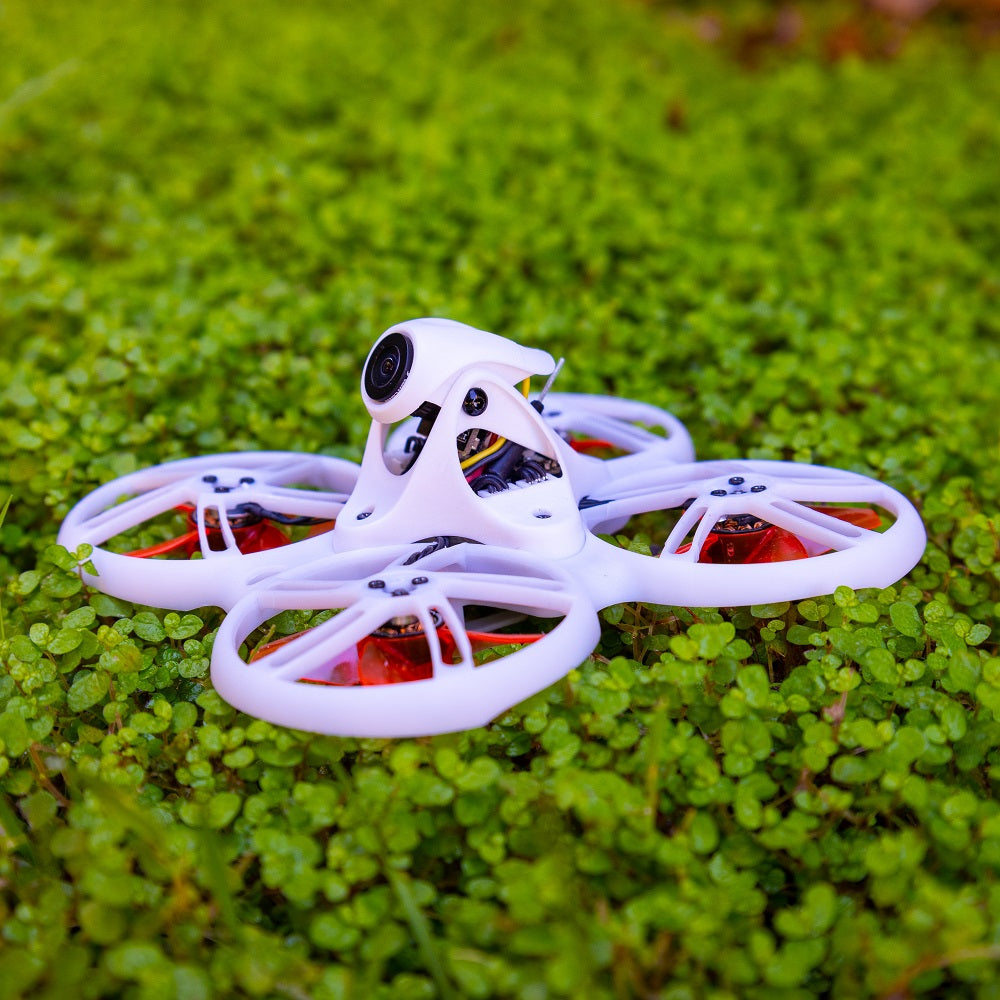
“Emax Tinyhawk 3 FPV Racing Drone …” from pyrodrone.com and used with no modifications.
Identify Your Issue: Common Symptoms
Here’s a quick rundown of symptoms that might indicate a problem with your Tinyhawk:
If your drone isn’t responding to your controls, you might be facing a binding issue.
When your drone’s range is shorter than expected, it could be due to antenna placement or environmental interference.
Video feed issues often manifest as static or poor image quality, suggesting a problem with the transmission.
Recognizing these signs early on can save you a lot of trouble down the line.
The Fix-It Kit: Tools You’ll Need
To tackle these issues, you’ll need a few tools in your kit. Here’s what I recommend having on hand:
A small Phillips head screwdriver for any physical adjustments.
Your Tinyhawk’s manual – it’s your troubleshooting bible.
A clean, well-lit workspace to keep track of any small parts.
With these tools ready, you’re prepared to take on most Tinyhawk problems.
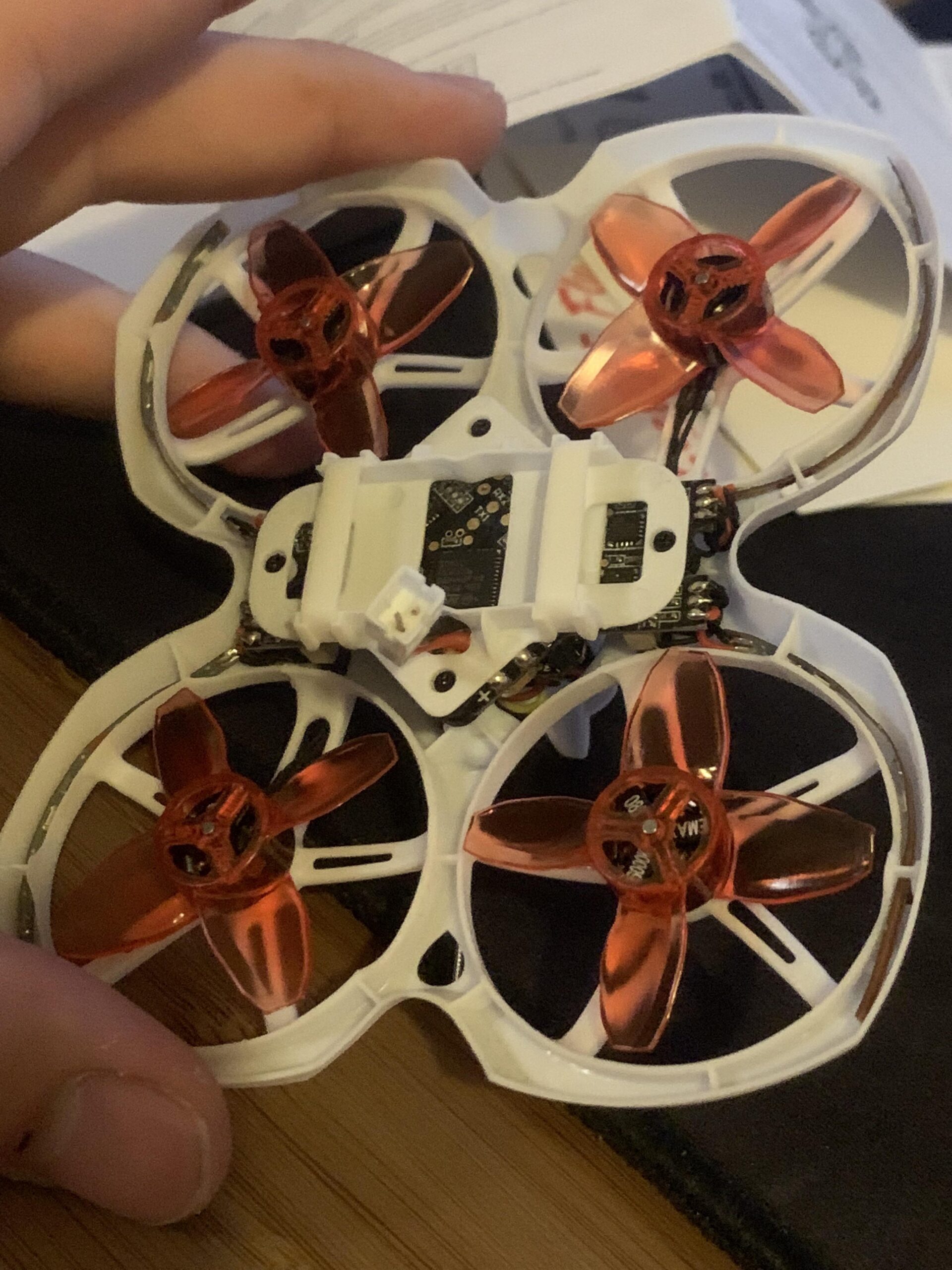
Binding Woes: Syncing Your Controller With Ease
If your Tinyhawk isn’t responding to your controller, don’t panic. Binding is the process that links your controller to your drone, and sometimes it just needs a little nudge. Whether you’re setting up for the first time or re-establishing a connection after a hiccup, binding is a straightforward process.
Step-by-Step Binding Guide
Here’s how to bind your Tinyhawk to your controller:
First, make sure your drone is turned off.
Turn on your controller and look for the binding mode. This can usually be activated by a specific button combination or menu setting.
With your controller in binding mode, turn on your Tinyhawk.
Wait for a few moments. You should see an indication that the binding is complete, often a solid light on both the drone and the controller.
If these steps don’t work, refer to your manual for model-specific instructions.
When to Reset: Rebinding Scenarios
Sometimes, you might need to rebind your Tinyhawk to your controller. This could be necessary if:
You’ve made significant changes to your controller settings.
Your drone is not responding correctly or consistently.
You’re using a new controller.
Rebinding is just as easy as the initial binding, so don’t hesitate to do it if you’re experiencing issues.
Antenna Adjustments for Optimal Reception
When your Tinyhawk’s range isn’t living up to expectations, it’s often an antenna issue. The antenna is the lifeline between your drone and your controller, so its condition and placement are crucial. Make sure the antenna is securely attached and positioned to minimize obstructions. Consider upgrading to a higher gain antenna if you’re consistently facing range issues. These antennas can provide a stronger signal, which translates to better control and further flights.
Know Your Environment: Avoiding Interference
The area you choose to fly in can greatly impact your Tinyhawk’s performance. Interference from Wi-Fi signals, power lines, or other electronic devices can limit your range and cause control issues. To maximize your flying experience, opt for open spaces away from urban clutter. Not only will this reduce interference, but it’ll also give you more room to explore and hone your piloting skills.
Clear Video Feed: Static Be Gone!
There’s nothing more frustrating than a video feed that’s breaking up when you’re in the middle of a flight. This static can be caused by a variety of factors, including interference, damaged cables, or incorrect video transmitter settings. Ensuring your video feed is as clear as possible not only enhances your flying experience but also helps you avoid obstacles and accurately gauge distances.
Tracking Down the Source of Video Noise
When you’re experiencing video noise, the first step is to track down the source. Start by checking the connections between your camera, video transmitter, and antenna. A loose connection can often be the culprit. If everything is secure, inspect your cables for damage. Sometimes, a frayed wire or a crushed cable can cause significant video issues. If your hardware looks good, it might be time to check your settings. Ensure your video transmitter is on the correct frequency and that your goggles are tuned to match.
Simple Solutions for a Crisp Clear View
If you’re experiencing camera issues with your EMAX Tinyhawk, don’t worry. Check out these simple solutions for a crisp clear view that will help you get back to enjoying your FPV racing experience.
If your video feed is still not crystal clear, here are a few simple solutions to try:
Change locations to see if interference is causing the problem.
Adjust the position of your antennas to ensure they’re not blocked by any part of your drone’s frame.
Reduce the power output of your video transmitter if you’re flying close range, as too much power can cause interference.
By tweaking these variables, you can often clear up a fuzzy video feed and get back to flying with confidence.
The Stability Saga: Calibration and Care
Ensuring the stability of your drone is crucial, especially when it comes to racing drones like the EMAX Tinyhawk. Regular calibration and care are essential to maintain optimal performance and to prevent common issues that can affect your drone’s flight. Whether it’s a matter of fine-tuning the settings or replacing worn-out parts, taking the time to care for your drone can make all the difference in your racing success.
Is your Tinyhawk flying erratically or not holding a steady hover? It might be time to calibrate your gyro and accelerometer. These sensors are responsible for detecting movements and positioning, and if they’re out of whack, your drone won’t fly right. Calibration is a simple process that can make a world of difference in your Tinyhawk’s performance.
Remember, always perform calibration on a level surface and follow your Tinyhawk’s manual for the best results.
Gyro and Accelerometer Tuning
Calibrating your Tinyhawk’s gyro and accelerometer is usually done through the drone’s software interface. Connect your drone to your computer and open the configuration software. Look for the calibration section, and follow the prompts. This typically involves setting your drone on a flat surface and hitting ‘calibrate’. Once done, your drone should fly smoother and more predictably.
Post-Crash Checks: Keeping Your Tinyhawk in Tip-Top Shape
Crashes are a part of learning to fly, but they can throw your Tinyhawk’s calibration off. After a crash, give your drone a thorough check-over. Look for any physical damage, ensure all propellers are intact, and that the frame isn’t bent. If everything looks good physically, it’s a wise idea to re-calibrate your gyro and accelerometer to correct any misalignments caused by the impact.
Flyaway Fixes: Preventing Loss of Control
A flyaway is when your Tinyhawk decides to go on an unplanned solo adventure. This can happen for a few reasons, like signal loss or interference. To prevent this, it’s crucial to set up your failsafe options correctly. A failsafe is a pre-set command that tells your drone what to do if it loses the signal from your controller.
Here are the failsafe settings you should consider:
Auto-land: Your drone will slowly descend and land where it is.
Return to home: Your drone will fly back to a pre-set home point.
Hover: Your drone will stay in place until the signal is restored.
Choose the best failsafe option for your flying environment and always test it in a safe area before heading out.
Understanding and Setting Failsafe Options
To set your failsafe options, you’ll need to access your Tinyhawk’s flight controller settings. Connect your drone to your computer, and in the configuration software, navigate to the failsafe section. Here, you can choose your preferred failsafe behavior. Make sure to save your settings before disconnecting. And remember, always test your failsafe in a controlled environment to ensure it works as expected.
What to Do When Your Drone Goes Rogue
If you’re facing issues with your drone’s performance, or if it’s not responding as expected, it’s crucial to address these problems promptly. For insights and solutions on how to handle a drone that’s not cooperating, consider exploring the comprehensive guide on fine-tuning your flight controller, which could help you regain control and stability.
If your Tinyhawk does fly away, stay calm. If you’ve set your failsafe, it should either return to you or land safely. If it doesn’t, keep an eye on its direction and head that way to retrieve it. Always keep a note of your drone’s last known location, as this can help you track it down. And most importantly, review what went wrong so you can prevent it from happening again.
Keeping Your Tinyhawk in the Race
Just like a race car, your Tinyhawk needs a pre-flight check to ensure everything is in working order. Check your propellers for any damage, ensure your battery is fully charged, and that your controller and video transmitter batteries are fresh. This pre-flight ritual will help you catch any issues before they become problems in the air.
Prompt post-flight practices are just as important. Clean off any dirt or debris, check for any new damage, and store your drone in a safe place. Taking care of your Tinyhawk after each flight will prolong its life and keep it ready for the next race.
Pre-Flight Prep for Reliability
Imagine your Tinyhawk as a high-performance athlete; it needs a good warm-up before the main event. Here’s a quick pre-flight checklist to ensure your drone is in top form before takeoff:
Inspect the propellers for any nicks or bends that could affect flight.
Ensure the battery is fully charged and properly seated in the drone.
Check that the antenna is securely attached and positioned for the best signal.
Verify that your controller and video transmitter batteries have enough juice.
Do a quick control test to confirm everything is responsive and working.
Running through these steps will give you peace of mind and help prevent mid-air mishaps.
Prompt Post-Flight Practices
After each flight, take a moment to care for your Tinyhawk, just as you would after a workout session. Clean any debris from the propellers and body to avoid buildup that could impair performance. Examine the drone for any damage, especially after a rough landing or collision. If you spot any issues, address them before your next flight. Lastly, store your Tinyhawk in a safe, dry place to protect it from the elements and accidental damage. For more detailed guidance, check out this pre-race checklist to ensure optimal drone performance.
Frequently Asked Questions
How Do I Update My Tinyhawk’s Firmware?
Updating your Tinyhawk’s firmware can enhance its performance and add new features. To update, download the latest firmware from the EMAX website. Connect your drone to your computer and open the flight controller software. Follow the prompts to flash the new firmware onto your Tinyhawk. Always read the release notes for any specific instructions or changes included in the update.
What’s the Ideal Environment for Flying a Tinyhawk?
Your Tinyhawk thrives in open spaces free from interference. An open field, park, or large indoor area like a gymnasium is perfect. Avoid areas with lots of Wi-Fi signals, power lines, or metal structures that can disrupt your drone’s communication systems. Calm weather conditions are also crucial; even a small drone like the Tinyhawk can struggle in strong winds.
How Can I Tell if My Tinyhawk’s Battery is Healthy?
A healthy battery is key to a successful flight. Check your battery’s voltage before and after flights; a fully charged Tinyhawk battery should read around 4.2 volts per cell. After a flight, if the voltage drops below 3.5 volts per cell, it’s time to land and recharge. Also, look for any swelling or damage to the battery, as these are signs it needs to be replaced.
My Tinyhawk Won’t Fly Straight – What Could be Wrong?
If your Tinyhawk isn’t flying straight, it could be due to a few reasons. Check for damaged or unbalanced propellers, as they can cause erratic flight. Also, ensure your drone’s firmware is up to date and recalibrate the gyro and accelerometer. If the problem persists, inspect the motors and frame for any signs of damage or misalignment.
Can I Customize the Settings on My Tinyhawk?
Absolutely! Customizing your Tinyhawk’s settings can fine-tune its performance to match your flying style. Use the flight controller software to adjust settings like flight modes, PID tuning, and rates. Experimenting with these settings can make your Tinyhawk more responsive, stable, or agile, depending on your preferences. Just remember to make small changes and test fly after each adjustment.
By following these tips and maintaining your Tinyhawk with care, you’ll be able to tackle common problems and keep your drone flying high. Remember, a little troubleshooting can go a long way in ensuring your Tinyhawk is always ready for the next race. Happy flying!
Citations:
[1] https://www.reddit.com/r/fpv/comments/t7lv3z/any_ideas_on_how_to_fix_this_tinyhawk_iii_motor/
[2] https://www.youtube.com/watch?v=__26LJ9uaWg
[3] https://www.youtube.com/watch?v=aqxycK20WUE
[4] https://intofpv.com/t-resurrecting-dead-emax-tinyhawks
[5] https://www.youtube.com/watch?v=KcyUqiMy-Mk
Author

Lerat 2 Pack Hand Warmers Rechargeable, Portable Electric Hand Warmers Reusable, Portable Pocket Heater, Gifts for Men Women Kids, Hunting, Golf, Camping Accessories
$11.99 (as of November 3, 2026 22:32 GMT +00:00 – More infoProduct prices and availability are accurate as of the date/time indicated and are subject to change. Any price and availability information displayed on [relevant Amazon Site(s), as applicable] at the time of purchase will apply to the purchase of this product.)
Gaiam Thick Yoga Mat, Exercise & Fitness Mat with Easy-Cinch Carrying Strap | Non-Slip NBR Foam | Joint Cushioning | Yoga, Pilates, Fitness & Floor Workouts | 72″L x 24″W
$23.08 (as of November 3, 2026 22:32 GMT +00:00 – More infoProduct prices and availability are accurate as of the date/time indicated and are subject to change. Any price and availability information displayed on [relevant Amazon Site(s), as applicable] at the time of purchase will apply to the purchase of this product.)
LifeStraw Personal Water Filter for Hiking, Travel and Emergency, Blue, 1PK | Water Filter for Hiking, Camping, Travel, and Emergency Preparedness, Removes Bacteria and Parasites
(as of November 3, 2026 22:32 GMT +00:00 – More infoProduct prices and availability are accurate as of the date/time indicated and are subject to change. Any price and availability information displayed on [relevant Amazon Site(s), as applicable] at the time of purchase will apply to the purchase of this product.)
Walking Pad Treadmill with 5% Incline – Under Desk Running Machine Mat Pads for Home Office Portable Small Compact Quiet Flat Indoor Magnetic Lightweight Electric Treadmills Remote Control
(as of November 3, 2026 22:32 GMT +00:00 – More infoProduct prices and availability are accurate as of the date/time indicated and are subject to change. Any price and availability information displayed on [relevant Amazon Site(s), as applicable] at the time of purchase will apply to the purchase of this product.)