Sawyer Products SP128 Mini Water Filtration System, Single, Blue
$28.99 (as of November 3, 2026 22:32 GMT +00:00 – More infoProduct prices and availability are accurate as of the date/time indicated and are subject to change. Any price and availability information displayed on [relevant Amazon Site(s), as applicable] at the time of purchase will apply to the purchase of this product.)
Owala Marvel Spider-Man FreeSip Stainless Steel Water Bottle 32 oz
$34.11 (as of November 3, 2026 22:32 GMT +00:00 – More infoProduct prices and availability are accurate as of the date/time indicated and are subject to change. Any price and availability information displayed on [relevant Amazon Site(s), as applicable] at the time of purchase will apply to the purchase of this product.)
Gas One GS-3400P Propane or Butane Stove Dual Fuel Stove Portable Camping Stove – Patented – with Carrying Case Great for Emergency Preparedness Kit
$29.99 (as of November 3, 2026 22:32 GMT +00:00 – More infoProduct prices and availability are accurate as of the date/time indicated and are subject to change. Any price and availability information displayed on [relevant Amazon Site(s), as applicable] at the time of purchase will apply to the purchase of this product.)
Fit Simplify Resistance Loop Exercise Bands with Instruction Guide and Carry Bag, Set of 5
$9.98 (as of November 3, 2026 22:32 GMT +00:00 – More infoProduct prices and availability are accurate as of the date/time indicated and are subject to change. Any price and availability information displayed on [relevant Amazon Site(s), as applicable] at the time of purchase will apply to the purchase of this product.)
LifeStraw Go Series – BPA-Free Water Filter Bottle for Travel and Everyday Use Removes Bacteria, Parasites and Microplastics, Improves Taste, 1L Aegean Sea
$37.05 (as of November 3, 2026 22:32 GMT +00:00 – More infoProduct prices and availability are accurate as of the date/time indicated and are subject to change. Any price and availability information displayed on [relevant Amazon Site(s), as applicable] at the time of purchase will apply to the purchase of this product.)Key Takeaways
-
KISS FC is a user-friendly flight controller designed for racing drones, offering easy setup and fine-tuning.
-
Hardware installation and wiring are straightforward, enabling a quick start for drone enthusiasts.
-
Software configuration is essential for optimal performance, with a dedicated GUI for KISS FC users.
-
PID tuning and rate adjustments are crucial for responsive and smooth drone handling.
-
Regular firmware updates ensure that your KISS FC stays current with the latest improvements and features.
Soar to Victory: Tuning Your Racing Drone with KISS FC
When you unbox a KISS FC, you’re not just holding a piece of technology; you’re holding the key to unlocking the true potential of your racing drone. This flight controller is renowned for its simplicity and performance, making it a favorite among racing enthusiasts.
KISS FC’s Impact on Drone Performance
The KISS FC, standing for ‘Keep It Super Simple’, is a flight controller that’s all about efficiency and effectiveness. Its streamlined approach means you spend less time fiddling with complex settings and more time in the air, pushing your drone to its limits. The KISS FC’s firmware is fine-tuned for racing, giving you the responsiveness and agility needed to navigate through the most challenging courses.
Why KISS FC Stands Out in the Racing Scene
What sets the KISS FC apart is its focus on essential features that matter most to racers. You won’t find unnecessary bells and whistles here. Instead, you get a robust flight controller that excels at delivering a locked-in feel during flight. This means tighter turns, more accurate maneuvers, and ultimately, faster lap times.

Starting Line: KISS FC Setup Basics
Setting up your KISS FC is a breeze, but don’t let that fool you into rushing through the process. A well-installed flight controller is the foundation of a well-performing drone. Let’s walk through the initial steps to get you off the ground.
Unboxing and Initial Hardware Installation
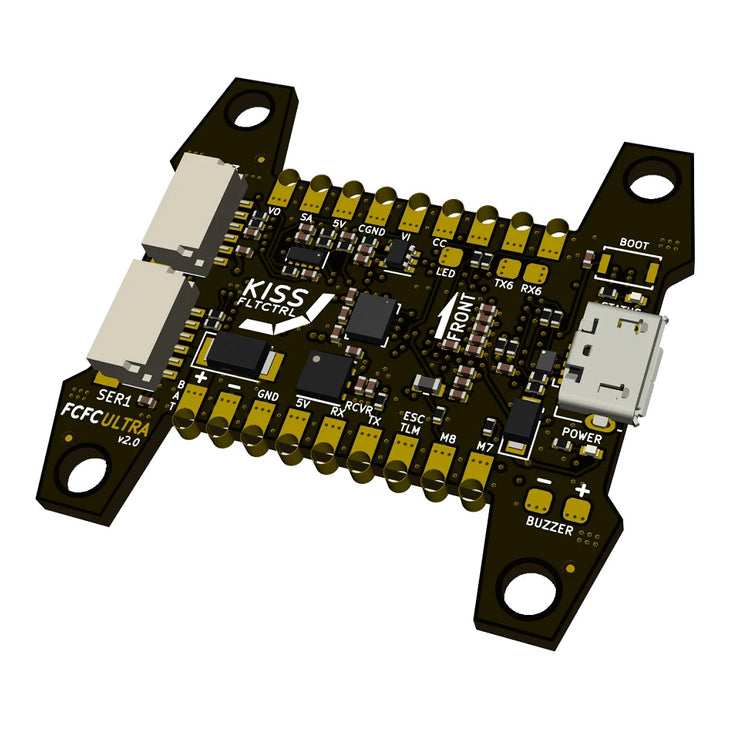
Once you’ve got your KISS FC out of the box, the first step is to get it mounted onto your drone’s frame. Make sure it’s securely fastened and that the arrow on the board points towards the front of your drone. This ensures that your FC will accurately interpret your drone’s orientation.
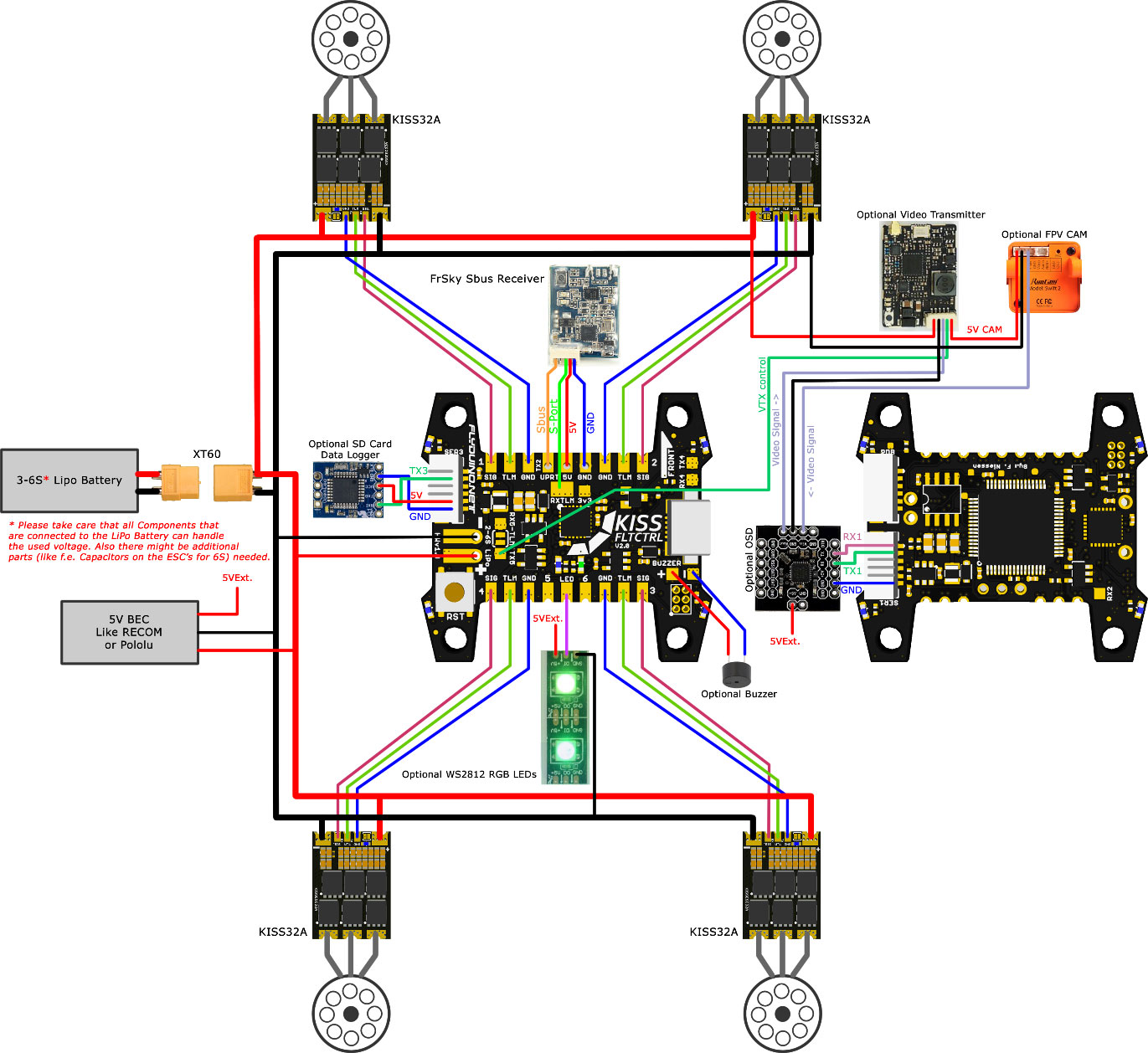
Wiring Essentials: A Step-by-Step Guide
-
Begin by soldering the power leads to the board, double-checking for correct polarity.
-
Next, connect your electronic speed controllers (ESCs) to the designated motor outputs.
-
Attach your receiver to the KISS FC, ensuring that you’re using the correct ports for your specific receiver type.
-
For telemetry and OSD features, connect the relevant wires to their respective ports on the FC.
Software Configuration: From Download to Flight
With the hardware in place, it’s time to dive into the KISS FC’s software. You’ll need to download the KISS FC GUI, a Chrome application that simplifies the configuration process. Connect your FC to your computer, launch the app, and follow the on-screen instructions to calibrate your sensors and set up your basic flight parameters.
Now that we’ve covered the essentials, it’s time to get into the finer details of tuning your racing drone with the KISS FC. In the next sections, we’ll delve into PID tuning, rate adjustments, and firmware updates, all of which are crucial for achieving peak performance. Stay tuned as we continue to explore how to master the dynamics and performance of your racing drone.
Maximizing Performance: Advanced KISS FC Features
Once you’ve got the basics down, it’s time to push your drone’s performance to the limit. The KISS FC comes packed with advanced features that can give you the edge in any race. Let’s explore some of these features and how to make the most of them.
Utilizing Built-In Telemetry for Real-Time Data
Real-time data is invaluable when you’re racing. The KISS FC’s built-in telemetry feature allows you to monitor critical flight information such as battery voltage, current draw, and ESC temperature. To enable telemetry, simply connect your ESCs to the designated telemetry pads on the FC and configure the settings in the KISS GUI. This data can be a game-changer during a race, allowing you to make informed decisions on the fly.
Customizing LED Settings for Enhanced Visibility
A racing drone isn’t just about performance; it’s also about style and visibility. The KISS FC supports LED strips that can be programmed for various functions like indicating turn signals, battery level, or just for showing off with a dazzling light show. The LED settings can be easily adjusted in the KISS GUI, giving you full control over the aesthetics of your drone.
Most importantly, these LEDs aren’t just for looks. They can help you keep track of your drone’s orientation during high-speed maneuvers, ensuring you never lose sight of your racer.
Battery Monitoring and Power Distribution Management
Efficient power distribution is crucial for maintaining optimal performance throughout a race. The KISS FC’s voltage and current sensors allow for precise battery monitoring, helping you to avoid the dreaded voltage sag and manage your power distribution effectively. By keeping an eye on your power consumption, you can pace your flight to maximize both speed and endurance.
The Technician’s Touch: Troubleshooting Common Issues
Even with the best hardware, issues can arise. Knowing how to quickly diagnose and resolve problems can mean the difference between a minor hiccup and a race-ending disaster. Here are some common issues you might encounter and how to fix them.
Example: You’re at the starting line, and your drone suddenly won’t arm. Before you panic, check your receiver connections and ensure your transmitter is properly bound. If everything looks good, connect to the KISS GUI and verify that your throttle endpoints are correctly set.
With a little bit of troubleshooting knowledge, you’ll be back in the air in no time.
Signal Loss: Diagnosis and Fixes
Signal loss can be a heart-stopping moment, but it’s often a simple fix. Start by checking your receiver’s antennas for damage or improper placement. If your antennas are fine, inspect your wiring for any loose connections or shorts. Sometimes, interference from other electronic devices can cause signal loss, so be sure to keep your receiver away from high-power components like ESCs and VTXs.
ESC Calibration: Ensuring Synchronized Performance
To get the most out of your motors, your ESCs must be calibrated to respond uniformly to throttle input. This can be done through the KISS GUI by following the ESC calibration procedure. Properly calibrated ESCs ensure smooth, synchronized motor operation, which is critical for maintaining control during tight turns and rapid accelerations.
Remember, a well-tuned drone is a fast drone. Don’t skip this step!
Failsafe Setup: Preparing for Unexpected Scenarios
Example: Mid-race, you encounter interference and your drone fails to respond. A well-configured failsafe can guide your drone to a safe landing instead of a crash. Set your failsafe through the transmitter and verify it in the KISS GUI to ensure your drone knows what to do if it loses your signal.
By preparing for the unexpected, you can protect your equipment and keep the race going.
Flying Beyond: Expanding Your KISS FC Configuration
As you become more experienced, you’ll want to expand your KISS FC’s capabilities. Integrating additional hardware can enhance your racing experience and give you more tools to secure that first-place finish.
Integrating GPS Modules for Enhanced Navigation
For those looking to add an extra layer of functionality to their racing drone, a GPS module can be a great addition. While not typically used in racing scenarios, GPS can be invaluable for practice sessions, allowing you to track your flight path and analyze your performance. Setting up a GPS module with the KISS FC is straightforward, with clear instructions available in the KISS documentation.
Adding FPV Systems for the Ultimate Racing Experience
First-Person View (FPV) flying is at the heart of drone racing. Integrating an FPV system with your KISS FC elevates the racing experience, giving you a pilot’s-eye view of the course. When selecting an FPV camera and video transmitter (VTX), consider factors such as camera latency, VTX power, and antenna choice to ensure the best possible video feed.
With these advanced configurations and troubleshooting tips under your belt, you’re well on your way to becoming a master of racing drone dynamics and performance. Embrace the power of the KISS FC and let it lead you to victory!
Enabling OSD (On-Screen Display) features is a critical step for any pilot who wants to stay informed while flying. The KISS FC provides compatibility with various OSD systems, allowing you to see real-time data such as battery voltage, flight time, and signal strength directly on your FPV feed. This not only enhances your racing experience but also helps you make split-second decisions based on the status of your drone.
Enabling OSD Features for In-Flight Adjustments
To set up OSD with your KISS FC, you’ll need to connect it to a compatible OSD module. Once connected, you can customize the displayed data through the KISS GUI. This might include tweaking the layout of the OSD elements or deciding which data points are most crucial for your flights. Remember, a well-configured OSD can be your best friend during a high-stakes race.
Checking Your Gear: Pre-Flight and Post-Flight Checklists
Just like a pilot performs pre-flight checks, you should always check your drone before and after each flight. This not only ensures safety but also helps maintain your drone’s performance over time. Let’s go through the key points to check before you hit the throttle and after you’ve crossed the finish line.
Inspection Points Before Takeoff
Before every flight, make sure to:
-
Inspect your propellers for any damage or wear.
-
Check that all screws and mounts are tight and secure.
-
Verify that your battery is fully charged and properly connected.
-
Ensure that your antenna is securely attached and undamaged.
-
Calibrate your ESCs if you’ve made any changes to your setup.
These checks are quick but can save you from a multitude of problems in the air.
After each race, give your drone a once-over to look for any signs of damage or wear. It’s also a good idea to download and review your flight data if you’re using telemetry. This can help you spot any potential issues before they become serious problems.
Maintenance Tips After Every Race
After the adrenaline of the race has worn off, take the time to:
-
Clean off any dirt or debris from your drone.
-
Check your motors and bearings for any abnormal sounds or movements.
-
Inspect your battery for any swelling or damage.
-
Review your flight logs to look for any irregularities in performance.
Maintenance is the key to longevity and consistent performance in drone racing.
Frequently Asked Questions (FAQ)
As you dive into the world of KISS FC, you might have a few questions. Here are some common queries answered to help you get a better grasp of this flight controller.
Can KISS FC be used with any type of racing drone?
Yes, KISS FC is versatile and can be used with various types of racing drones. However, it’s best suited for smaller quadcopters used in FPV racing. Make sure to check compatibility with your drone’s frame and components before installation.
-
Best suited for mini quads and racing drones.
-
Check frame size and mounting pattern for compatibility.
KISS FC is designed to be adaptable, but always verify compatibility to avoid any surprises.
What are the benefits of using KISS over other flight controllers?
KISS FC stands out for its simplicity and performance. Its easy setup, straightforward GUI, and focus on essential racing features make it a favorite among drone racers. Additionally, its firmware is optimized for racing, providing responsive and precise control.
How often should I update my KISS FC firmware?
You should update your KISS FC firmware whenever a new version is released. Firmware updates often include bug fixes, performance improvements, and new features that can enhance your racing experience.
Keep an eye on the KISS website or user communities for announcements about new firmware releases.
What is the most challenging aspect of KISS FC setup?
For some, the most challenging aspect might be the initial wiring and ensuring that all components are correctly connected. However, with the KISS FC’s clear labeling and comprehensive documentation, these challenges can be easily overcome.
Is advanced knowledge in drones required to use KISS FC?
While having a good understanding of drone components and flight principles is beneficial, the KISS FC is designed to be accessible even to those with a basic knowledge of drones. The intuitive GUI and supportive community make it easier for newcomers to get started.
For those looking to delve deeper into the world of FPV drone racing, understanding the intricacies of your equipment is crucial. The KISS FC flight controller is a pivotal component that can significantly affect your drone’s performance. With its advanced firmware, it allows for precise control, which is essential in a racing scenario where every millisecond counts. To truly master your racing drone’s dynamics and elevate your flying skills, it’s important to familiarize yourself with the ultimate guide to building your own FPV racing drone, which includes a section dedicated to the KISS FC flight controller.
Author


STANLEY IceFlow Flip Straw 2.0 Bottle, 24 oz, Honeydew Garden | Easy Carry Handle | Twist On Lid and Flip Up Straw | Lightweight Water Bottle | Insulated Stainless Steel | BPA-Free
$26.26 (as of November 3, 2026 22:32 GMT +00:00 – More infoProduct prices and availability are accurate as of the date/time indicated and are subject to change. Any price and availability information displayed on [relevant Amazon Site(s), as applicable] at the time of purchase will apply to the purchase of this product.)
NBA 2K27 – PlayStation 5
$64.99 (as of November 3, 2026 22:32 GMT +00:00 – More infoProduct prices and availability are accurate as of the date/time indicated and are subject to change. Any price and availability information displayed on [relevant Amazon Site(s), as applicable] at the time of purchase will apply to the purchase of this product.)
FOCO NFL unisex-adult Nfl Team Logo 4-pack Reusable Grocery Shopping Bags Totes
$12.00 (as of November 3, 2026 22:32 GMT +00:00 – More infoProduct prices and availability are accurate as of the date/time indicated and are subject to change. Any price and availability information displayed on [relevant Amazon Site(s), as applicable] at the time of purchase will apply to the purchase of this product.)
Lormandy Straw Water Filter 5 Pack – Outdoor Camping & Hiking Survival Gear | Family Use Ultra-Light Personal Filter Straws | Backpacking, Travel, Bug-Out Bags, Emergency Preparedness
$69.88 (as of November 3, 2026 22:32 GMT +00:00 – More infoProduct prices and availability are accurate as of the date/time indicated and are subject to change. Any price and availability information displayed on [relevant Amazon Site(s), as applicable] at the time of purchase will apply to the purchase of this product.)